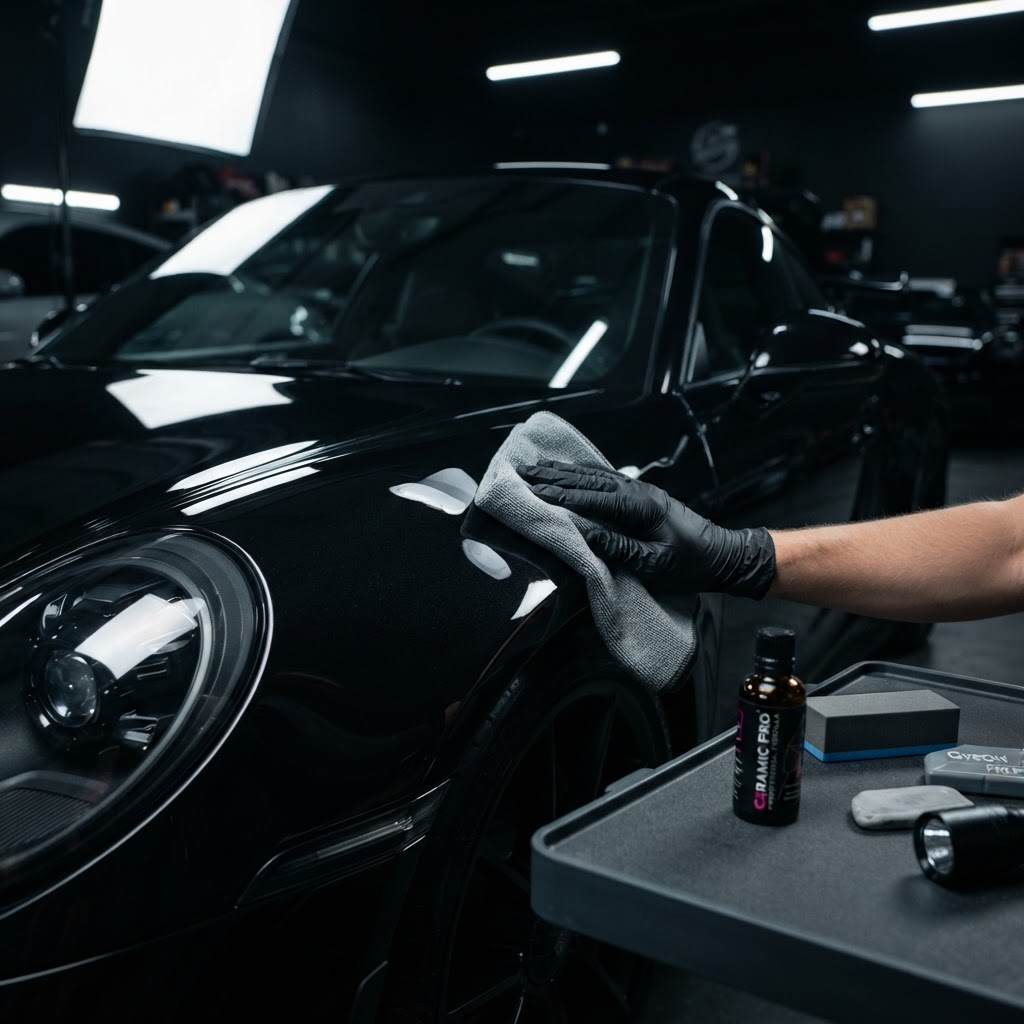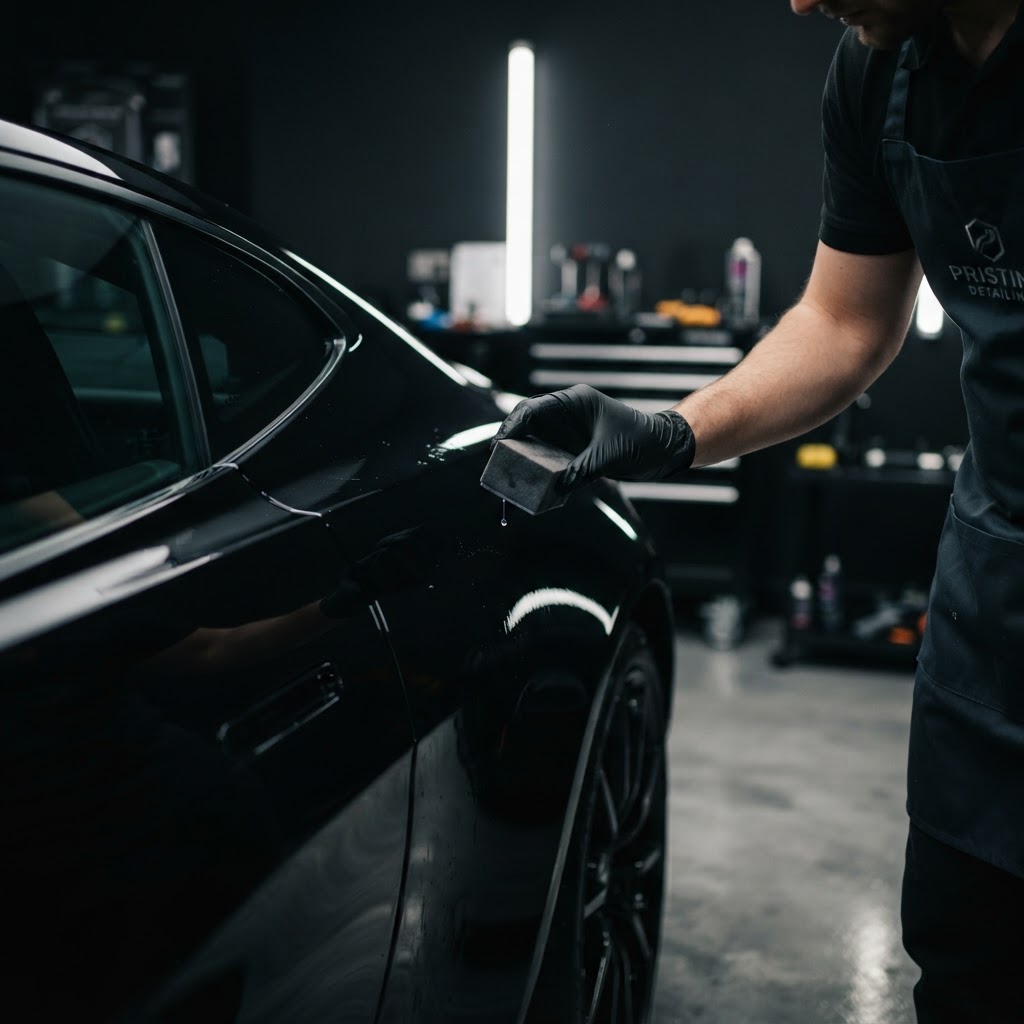
Hard water spots can compromise your vehicle's finish. Learn the professional techniques for safe Ceramic Coating Maintenance to keep your paint pristine.
Ceramic Coating Maintenance: How to Spot and Remove Hard Water Spots
Hard water spots are the most common challenge you will face during routine Ceramic Coating Maintenance. These mineral deposits can etch into your protective layer if left untreated.
In this guide, you will learn how to identify these spots and safely remove them without damaging your coating. Proper care ensures your investment lasts for years in Atlanta, Charlotte, Greensboro, or Houston.
Understanding Hard Water Spots
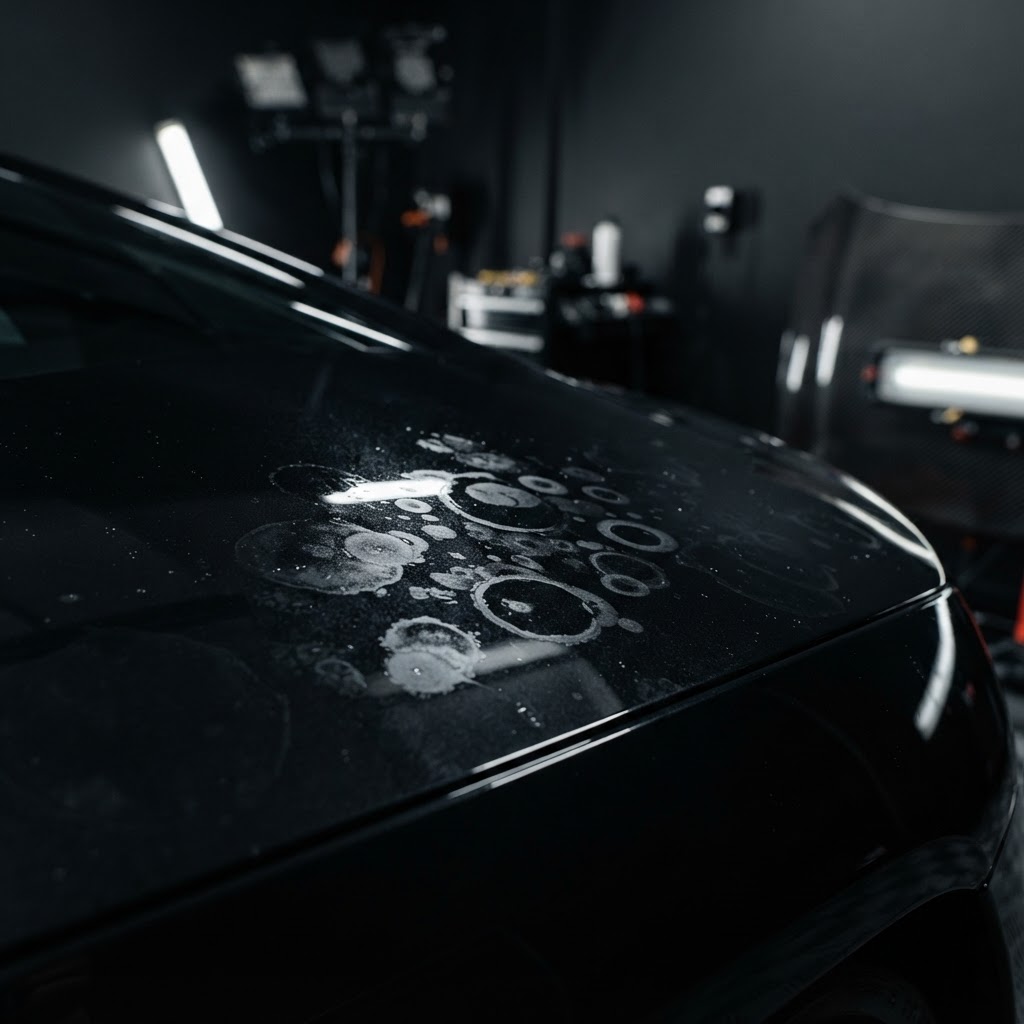
Hard water contains minerals like calcium and magnesium. When water evaporates on your paint, it leaves these minerals behind as a white, crusty deposit.
If you have a ceramic coating, these minerals sit on top of the protection. However, if left in direct sunlight, the heat can cause the minerals to bond aggressively to the surface.
Identifying Etching vs. Surface Deposits
Not all water spots are the same. Some are simply sitting on the surface, while others have started to etch into the coating.
- Surface deposits feel rough to the touch.
- Etched spots look like a faint ring or shadow under the light.
Safe Removal Techniques
Never use abrasive scrubbers or harsh scouring pads. These will scratch your coating and remove its hydrophobic properties.
Use a dedicated water spot remover designed for coated surfaces. Always test on a small, inconspicuous area first.
- Spray the product onto a clean microfiber towel.
- Gently wipe the affected area.
- Rinse thoroughly with clean water.
- Dry the area immediately using a plush microfiber towel.
The Role of pH-Neutral Soaps
Part of consistent Ceramic Coating Maintenance involves using the right shampoo. Avoid dish soaps or high-alkaline cleaners.
These chemicals strip away the sacrificial layers of your coating. Stick to pH-neutral car soaps to ensure minerals don't get trapped in a layer of grime.
Prevention Strategies for Your Vehicle
Water spots are usually a result of poor drying techniques. Never let your car air dry after a wash or a rain shower.
- Always dry your car in the shade.
- Use a high-quality, clean drying towel.
- If you park in a sprinkler zone, relocate your vehicle to avoid constant mineral exposure.
When to Call a Professional
If the spots remain after a gentle cleaning, do not press harder. You risk polishing through the coating entirely.
We provide professional mobile service at your home or business. We can inspect the health of your coating and perform light decontamination to restore the finish.
Do vs. Don't for Water Spot Removal
| Action | Do | Don't | | :--- | :--- | :--- | | Cleaning | Use pH-neutral soap | Use vinegar or acid-based cleaners | | Drying | Use a soft microfiber towel | Let the car air dry in the sun | | Tooling | Use gentle pressure | Use abrasive scrub sponges |
What to do next
If your vehicle has stubborn deposits, avoid the temptation to use heavy-duty compounds. You can easily remove the protection you paid for.
Ready to get your vehicle professionally inspected? RoadHue brings professional mobile service to your home or business. Get a Free Estimate today.
Get a Free Estimate
Ready to protect or restore your vehicle? RoadHue brings professional mobile paint repair to your home or business across Atlanta.
Get Your Free Estimate